UNIFIL officials concede that if all-out war erupted, they could do little to stop it.
The force was intended as a “model for managing conflict and avoiding unintended escalations, not for resolving conflict and reversing escalations that are intentional or are based on mistrust and miscalculation,” wrote Thanassis Cambanis, director of Century International.
The current conflict started on Oct. 8, when Hezbollah launched attacks on Israel in support of its Palestinian ally Hamas. Hezbollah’s leader, Hasan Nasrallah, has repeatedly said his group will halt fighting if a cease-fire is reached in Gaza. Israel has also said it does not want a war, but officials there have repeatedly signaled an intention to shift the military’s focus to the northern border.
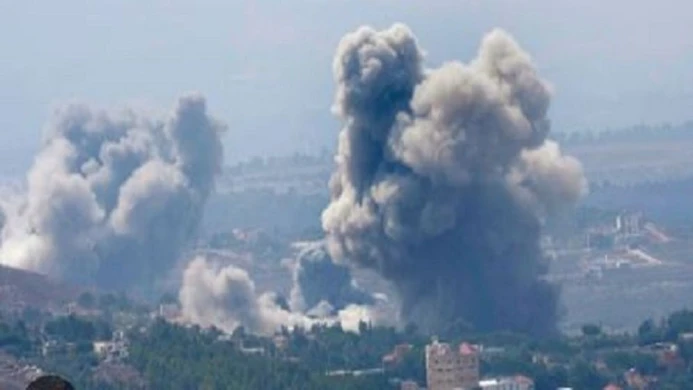
Fears of wider conflict peaked this summer. On July 30, Israel assassinated a senior Hezbollah commander in the suburbs of Beirut. Less than a month later, on Aug. 25, Hezbollah and Israel traded their heaviest fire of the war, beginning with early-morning Israeli strikes on southern Lebanon that the Israel Defense Forces called “preemptive.”
That morning, the UNIFIL peacekeepers were placed at their highest alert level, Level 3, which requires them to shelter in underground bunkers, according to Capt. Alfonso Albar, another member of the Spanish contingent. “We were five hours in the bunker,” he said. “We could hear a lot of the Iron Dome,” Israel’s anti-rocket interceptor system.
Sometimes the peacekeepers received a warning suggesting Israel was preparing to strike — a vague notice that the threat level should be raised. On some occasions, no attack came, suggesting at least some warnings were a battlefield feint, officials said.
When the peacekeepers aren’t on high alert, they patrol the Blue Line, the temporarily negotiated border established after Israel’s withdrawal from Lebanon in 2000. Aside from the occasional flare-ups between Hezbollah and Israel, the violations before October included incidents such as farmers leading animals across the border.
ow dozens of projectiles are launched back and forth daily.
“The sheer amount of violations is immense,” UNIFIL spokeswoman Kandice Ardiel said. Despite the barrage, the peacekeepers still coordinated between the Israeli and Lebanese armies to facilitate quotidian tasks in the border region, such as firefighting or utility repair, to spare workers “just doing their jobs.”
The Spanish contingent’s base, a few hundred yards from the Blue Line, sits close to the corner where the borders of Syria, Israel and Lebanon meet. From the guard towers, the peacekeepers can see Israeli military bunkers, positions from which Hezbollah has fired and the Israeli-occupied Golan Heights. Thirty-six members of the 109-person contingent are from El Salvador.

The base has not been hit during the current conflict, and none of the more than 10,000 UNIFIL peacekeepers have been killed. This month, a UNIFIL contract worker was killed after a strike on his car, and a barber who worked with the Spanish contingent was injured by sniper fire from Israel as he made his way to work.
Down the road from the base is Ghajar, one of several border towns fought over by Lebanon and Israel. The Blue Line runs through Ghajar. But since October, Israel, which occupies the town, has been building a fence around it, prompting Lebanon to accuse Israel of trying to annex it illegally.
As the peacekeepers drove by last week, an Israeli flag could be seen on a section of fence facing Lebanon. It appeared to be new, they said.

Beyond the base on the Lebanese mountains are idyllic towns with red-tiled roofs and others whose residents fled after they were pounded again and again. In a valley are chicken farms and fields where wheat and other crops grew, the farmers struggling to harvest because of the war.
UNIFIL provides humanitarian aid, including to civilians under imminent threat of violence. At least twice during the current conflict, Albar said, civilians sheltered at UNIFIL facilities in the Spanish contingent’s area.